


The right pillow can make a noticeable difference to how well you sleep and how refreshed you feel in the morning. By supporting your head and neck correctly, an ergonomic pillow helps maintain healthy spinal alignment and keeps you comfortably supported throughout the night.
Choosing an ergonomic pillow is more than softness or shape. The right height, firmness and support should complement your sleeping position, body proportions and mattress, creating a comfortable foundation for better sleep.
Key takeaways
- An ergonomic pillow should comfortably support your head and neck
- Pillow height should suit your sleeping position and body proportions
- Side sleepers generally need greater loft than back or stomach sleepers
- Contour pillows offer targeted support, while traditional shapes provide greater flexibility
- Memory foam, latex and fibre offer different levels of cushioning and support
- In Singapore’s warm climate, consider breathability and temperature regulation
What is an ergonomic pillow?
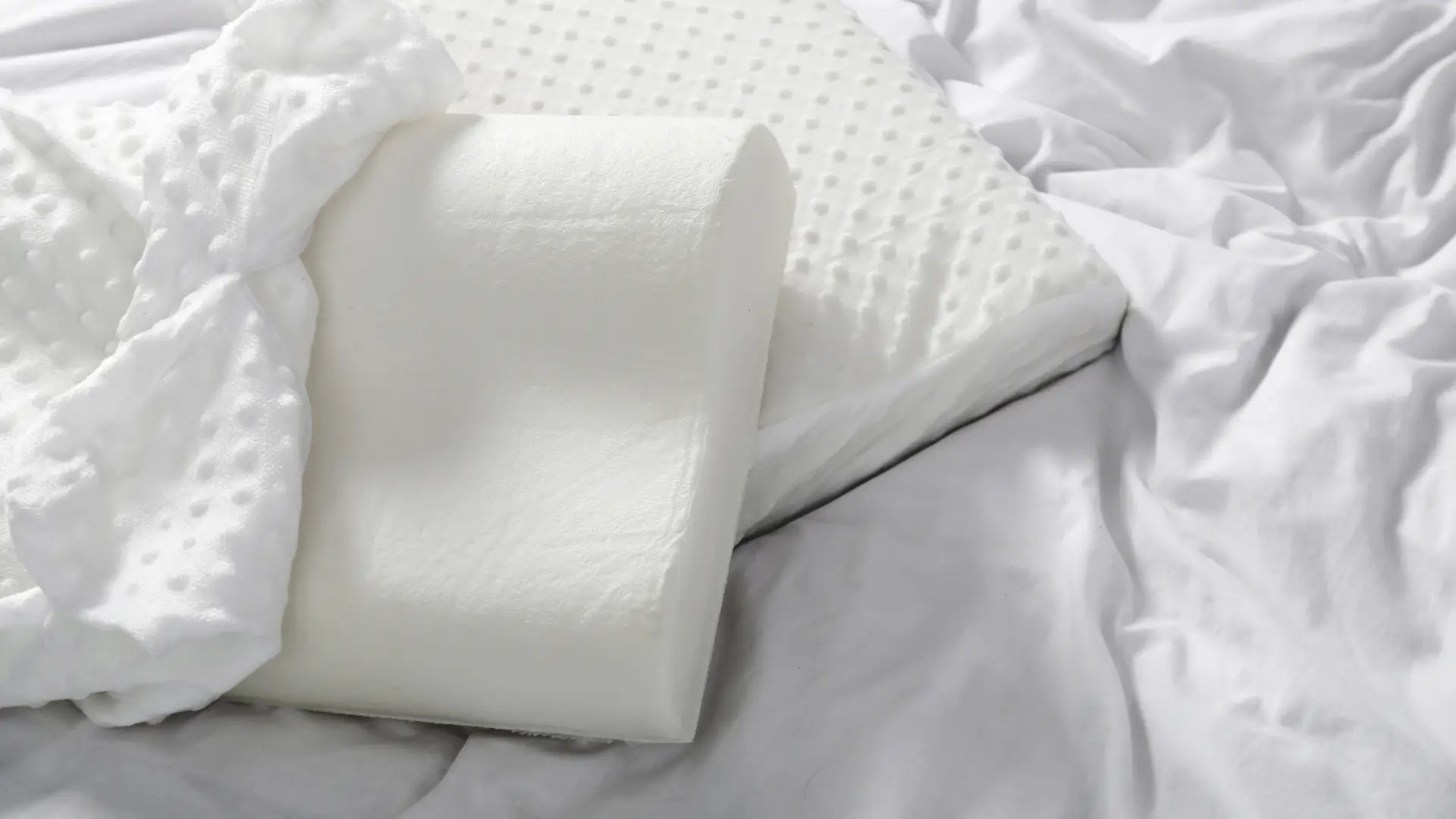
An ergonomic pillow is designed to support comfortable positioning of the head and neck during sleep. While the term is often associated with sculpted or contour pillows, ergonomics is ultimately about how well a pillow fits the person using it. The shape of a pillow is therefore only one aspect to keep in mind when shopping for an ergonomic pillow. The pillow’s height, firmness, material and ability to maintain its shape all influence how supportive it feels.
A traditional rectangular pillow may provide the right support for one person, while another may prefer a contoured design that follows the curves around the head and neck. We’ve included some advice below on how to find the right ergonomic pillow for your sleep style.
How do you choose the right ergonomic pillow?
Finding the right fit means balancing comfort and support according to your individual needs and preferences. To narrow down your options, consider four key factors: your sleeping position, ideal pillow height, preferred shape and choice of material.
Start with your sleeping position
Your preferred sleeping position provides a useful starting point because it changes the distance between your head and the mattress.
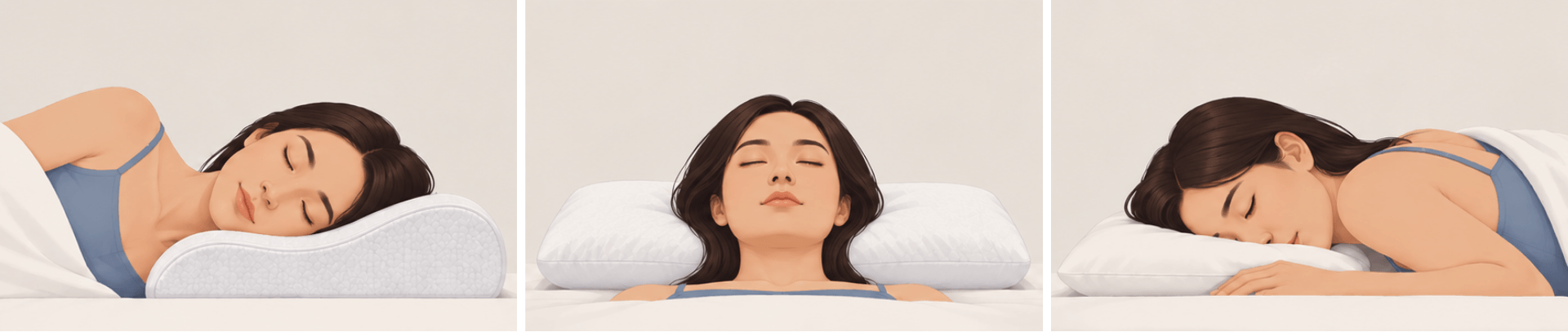
- Side sleepers generally need a higher pillow to fill the space created by the shoulder. If the pillow is too low, the head may tilt down towards the mattress. A pillow that is excessively high can create the opposite effect. A contour pillow is often ideal because of the wedge that can sit against your neck and help maintain the correct angle.
- Back sleepers typically require a medium-height pillow that supports the neck without pushing the head too far forward. These are often made of memory foam or latex, as these materials do not compress too much during the night.
- Stomach sleepers usually require less height. A lower and softer profile is usually best, as a thick pillow will usually force the head and neck into an uncomfortable angle. Make sure the pillow still has sufficient support to prevent your head from sinking too low.
If you regularly change positions during the night, look for a versatile pillow that provides enough support without feeling overly high or restrictive.
Find the right pillow height
Loft refers to the height of a pillow, particularly once the weight of your head is resting on it. There is no single ideal loft because shoulder width, head size and sleeping position differ between individuals. Your mattress also plays a role. If your shoulder sinks more deeply into a plush mattress, for example, you may require less pillow height than you would on a firmer sleep surface.
When lying down, consider the position of your head in relation to your neck and upper body. For optimal spinal alignment, ensure your head, neck and shoulders form a straight line with your chest and hips. Your pillow should comfortably support you without pushing your head upwards or allowing it to drop downwards.
Consider shape and contouring
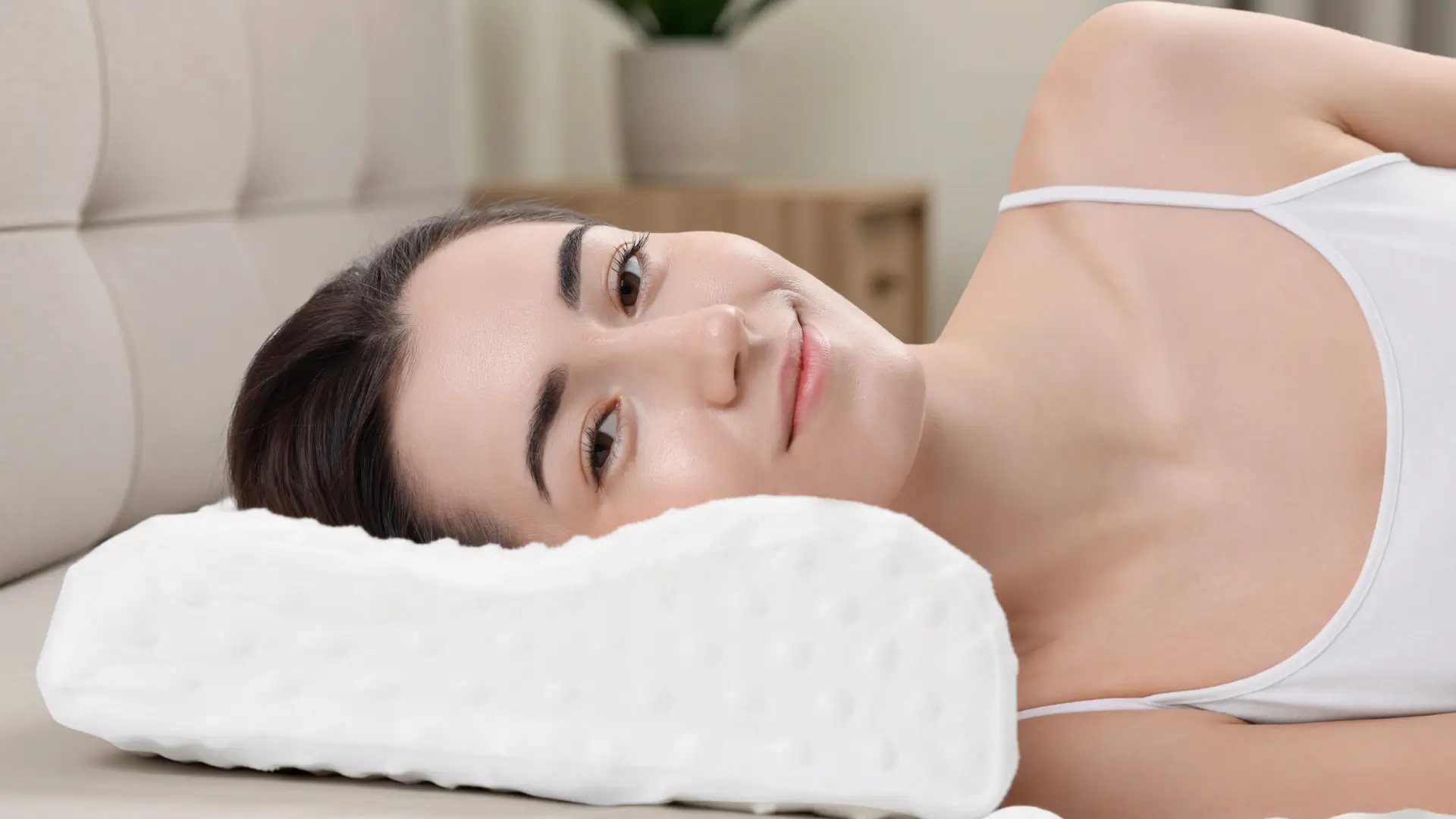
Contour pillows have a sculpted profile, with raised areas designed to sit beneath the neck and fill the natural gap between the head, neck and mattress. This support can suit side and back sleepers who need consistent cushioning to maintain comfortable alignment. Side sleepers may benefit from a higher contour to accommodate the shoulder, while back sleepers generally require a lower profile that supports the neck without pushing the head forward.
However, contouring is not essential for an ergonomic sleep setup. A traditional pillow may be equally suitable if its loft, firmness and feel complement your sleeping position. If the contoured shape is unappealing or uncomfortable, focus instead on the right materials and general pillow height for your needs.
Pillow dimensions also vary considerably. If you are deciding between Standard, Queen, King, European, bolster or body pillows, read our guide to pillow sizes in Singapore before choosing.
Choose the right material
Material influences how a pillow feels, responds and retains its shape. This plays into ergonomics just as much as a pillow’s shape. Without the right fill material, your pillow may not support you sufficiently throughout the night.
- Memory foam moulds in response to pressure, creating a close, conforming feel around the head and neck while distributing weight and pressure. Moulded memory foam can also be shaped into ergonomic contours.
- Latex has a more responsive quality, returning readily to shape as you move. It can be used in both traditional and contoured pillow designs and is popular for its hypoallergenic qualities.
- Fibre creates a more familiar, cushioned pillow feel and is available in different firmness levels. It may suit sleepers who prefer the softness and flexibility of a traditional pillow.
Down and down alternative pillows offer an especially soft, compressible feel and may work well for stomach sleepers who need a lower profile.
The best option is not necessarily the firmest material. Look for sufficient support to maintain a comfortable position without sacrificing the cushioning you prefer.
Choosing a pillow for Singapore’s climate
Comfort is also influenced by temperature. In Singapore’s warm, humid conditions, consider the complete construction of your pillow rather than support alone. Different pillow materials have varying temperature and airflow characteristics. For instance, latex pillows are known for being fairly breathable while memory foam retains heat. You may wish to shop for pillows infused with cooling gel or covered with moisture-wicking fabric.
Beyond the pillow itself, breathable covers, suitable bedding and good bedroom ventilation can all contribute to a more comfortable sleep environment.
Finding the right pillow for better sleep
Your pillow and mattress work together to support your sleeping position. Rather than choosing an ergonomic pillow based on shape, consider how its height, firmness and construction feel when you are lying on your own mattress.
Ultimately, the right pillow should feel comfortable and supportive without demanding your attention. When the shape, height and feel suit your body and sleeping position, your pillow becomes a natural part of a comfortable and supportive sleep environment.
Sealy Singapore ergonomic pillow range
At Sealy, we offer a range of pillows for all sleepers. These include contour options, memory foam and latex options, and several fibre pillow options. Browse the full range or see some of our popular options below.
Frequently asked questions
Side sleepers generally benefit from a medium-to-high loft that fills the space between the head and mattress created by the shoulder, such as memory foam or contour pillows. The ideal height will also depend on shoulder width, mattress firmness and how much the pillow compresses under weight.
Contour pillows are shaped to provide more defined support around the head and neck. They suit side and back sleepers particularly well, although the correct height remains important. A contoured shape that is too high or too low may still feel uncomfortable.
Your pillow may be too high if it noticeably pushes your head upwards when side sleeping, or pushes your chin towards your chest when sleeping on your back. Stomach sleepers may notice their neck bent upwards at an awkward angle if their pillow is too high. You may also wake up with stiffness in your neck, shoulders or upper back.
Not necessarily. A pillow needs enough resilience to support your head at an appropriate height, while still providing the level of cushioning that feels comfortable to you.
Ergonomic pillows are generally designed with support and positioning in mind and may feature contoured shapes or specialised materials.