


Shoulder pain can make it difficult to settle into a comfortable sleeping position at night. It often triggers the need to toss and turn in an effort to get comfortable, disturbing your sleep and leaving you feeling less refreshed in the morning.
Your mattress plays an integral role in how pressure is distributed around your shoulders while you sleep. Finding the best mattress for shoulder pain is therefore less about choosing a particular mattress type and more about achieving the right balance of comfort, pressure relief and support for your body.
Key points
- Your mattress influences how pressure is distributed around your shoulders at night
- Side sleepers need enough cushioning to accommodate the shoulders and hips
- Your mattress should balance pressure-relieving comfort with underlying support
- Your pillow should work with your mattress to support the neck and shoulders
- Consider replacing a mattress that is old or no longer feels supportive
Why do your shoulders feel uncomfortable in bed?
Your shoulders are one of the more prominent areas of the body, which means your mattress needs to accommodate their shape as you settle into bed.
When you sleep on your side, your shoulder bears more direct pressure as it presses into the fabrics and foams. If the sleep surface does not provide enough cushioning or relief, the pressure can become uncomfortable, triggering pain or a need to toss and turn. In contrast, sleeping on the stomach or back spreads body weight across a broader area and avoids placing the body’s full weight directly onto either shoulder.
However, your bed is only one part of the picture. Shoulder discomfort may of course stem from injuries and joint pain. Persistent, severe or unexplained shoulder pain should be discussed with an appropriate healthcare professional.
Choosing the best mattress for shoulder pain
If you regularly experience shoulder pain when lying down, it may be time to change your mattress or your pillow – or both. Together, your mattress and your pillow help to maintain spinal alignment and provide pressure relief. If either is poorly suited to your sleeping position or comfort needs, it may become more difficult to maintain a comfortable sleep posture.
Look for pressure-relieving comfort
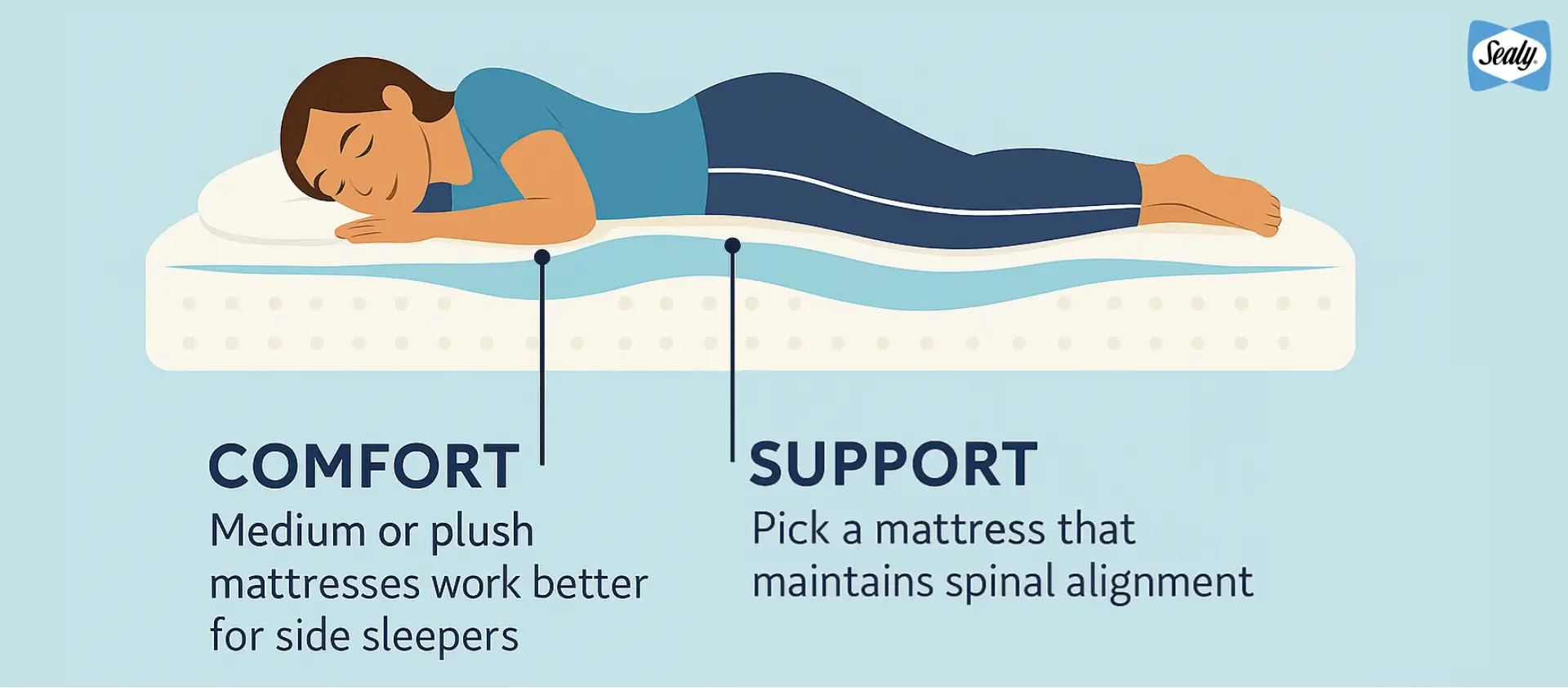
Your mattress should have enough cushioning to accommodate your pressure points. This is especially important for side sleepers, as their shoulders and hips press more deeply into the mattress, thereby concentrating pressure around specific areas of the body.
If you’re a side sleeper, look for a mattress with quality comfort layers and orthopaedic support designed to adapt to the contours of the body. At Sealy, we refer to this as conformance, where the mattress responds to your weight and movements across the surface of the mattress for targeted pressure relief. Learn more about our technology.
Choose an appropriate level of comfort or firmness
There is no universal firmness level suitable for everyone because comfort is highly personal. Your body weight, sleeping position and preferred mattress feel all influence how soft or firm a mattress feels to you.
Side sleepers often benefit from a plush to medium feel because it can provide some gentle support around the shoulder and hip while maintaining underlying support. Back and stomach sleepers may feel comfortable with a slightly firmer surface with less cushioning because their weight is distributed differently. Some sleepers change position throughout the night (known as combination sleepers), and as such may need to strike a balance with medium firmness. Consider how easily you can move without feeling as though you are sinking deeply into the mattress or resting uncomfortably on an inflexible surface.
Balance comfort with support
Shoulder comfort should not be considered in isolation. Your mattress needs to support the entire body, including the neck, lower back, hips and legs. A supportive mattress should respond to your body’s contours without allowing heavier areas to sink, helping to maintain comfortable spinal alignment as you sleep.
When lying down, consider whether your body feels comfortably supported and stable across the mattress, with your head, neck, shoulders and hips in a straight line. If possible, try several comfort levels in person and spend time in your usual sleeping position to assess how your shoulders, back and hips feel once you have settled into the mattress.
Choosing a pillow for shoulder pain
Your pillow is equally important to your sleep posture and overall comfort as your mattress, as the two work together. Your pillow supports your head, neck and shoulders, helping to maintain a more natural alignment through the upper spine. And, just like the choice of mattress, the right pillow for you depends partly on your sleeping position and how your body rests on the mattress.
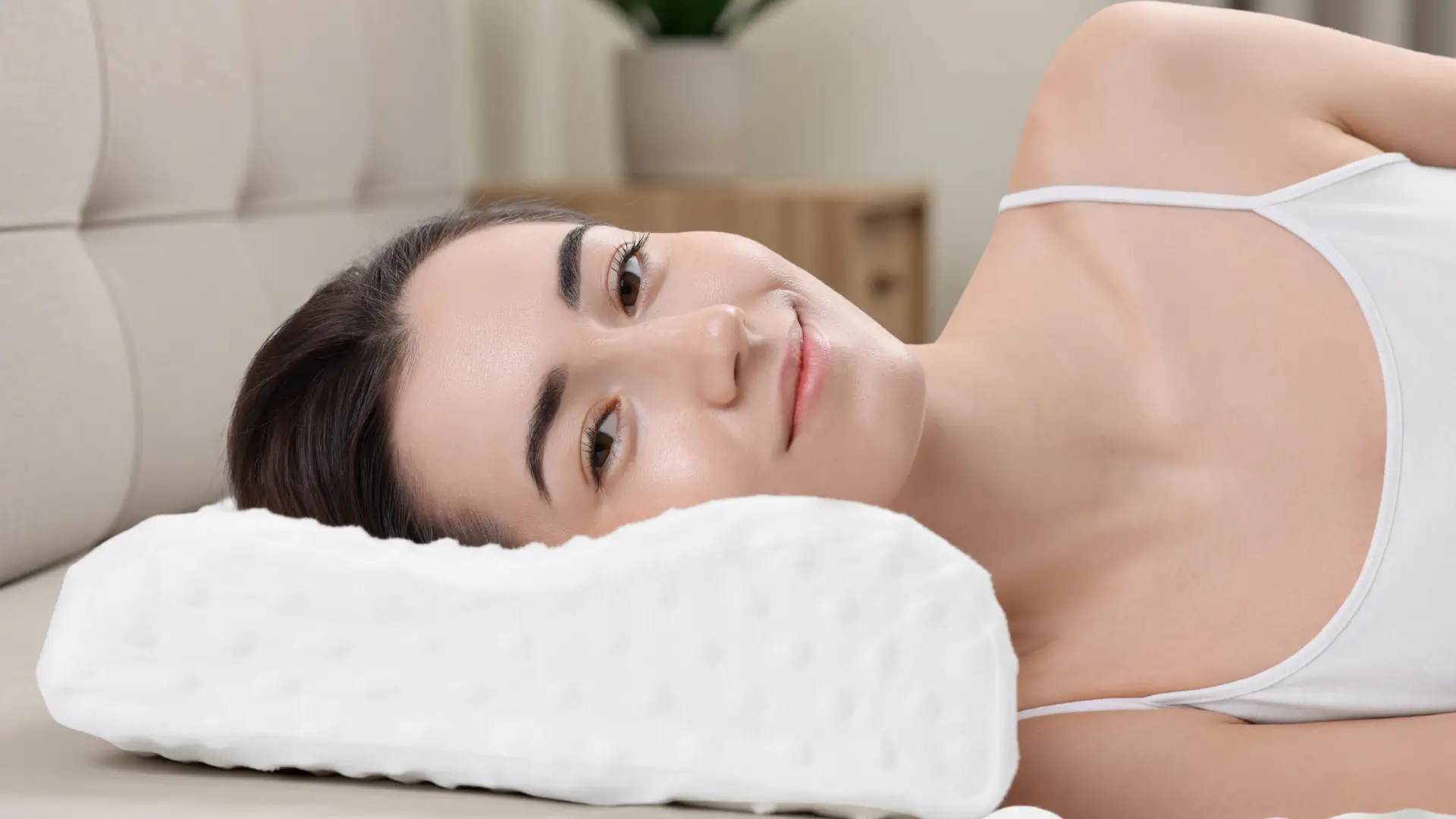
A pillow that is too high or too low can force the neck into an awkward angle and place pressure on your shoulders, even when the mattress itself is well suited to you. Side sleepers typically need a pillow that fills the space created between the head and the mattress by the shoulder. The solution is often a contour pillow with medium loft, as these are designed especially for side and back sleepers to support the neck and shoulders.
When should you replace your mattress?
Sometimes the issue is not the original mattress but how it has changed over time. Visible sagging, deep impressions and a noticeable decline in comfort or support may indicate that your mattress is no longer performing as intended. If you regularly wake feeling less comfortable than when you went to bed, and your mattress has developed significant wear, it may be worth considering a replacement.
When choosing a replacement, spend time testing different comfort levels. The ideal mattress should feel comfortably cushioned at the shoulders while providing orthopaedic support and pressure relief for the rest of your body.
Frequently asked questions
Neither option is inherently better. A firm surface may feel uncomfortable around the shoulder for some sleepers, especially side sleepers, while an excessively soft mattress may allow too much sinking. Look for a mattress that provides comfortable cushioning while maintaining reliable underlying support.
Many side sleepers prefer a mattress with enough cushioning to accommodate the shoulder and hip, often a plush or medium comfort feel. However, the ideal firmness depends on body weight, personal preference and typical sleep position, so trying different comfort levels in-store is worthwhile.
An old mattress may develop sagging or impressions that change how your body is supported. If your mattress has noticeably deteriorated and you are finding it increasingly difficult to get comfortable, it may be worth considering a replacement.
Yes. Your pillow influences the position of your head and neck in relation to your shoulders. Its ideal height varies according to your sleeping position, body proportions and mattress, so the pillow and mattress should be considered together as a sleep system.
Sleeping directly on an uncomfortable shoulder may increase pressure on that area. Another position may feel more comfortable, but there is no single sleeping position that suits everyone. Persistent or significant shoulder pain should be assessed by an appropriate healthcare professional.